
Vending is about more than just snacks and chocolate. £3.78bn more!
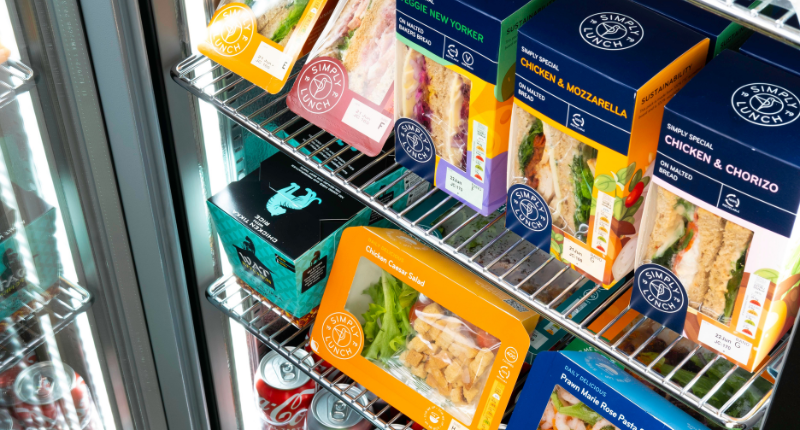
Ask most people what comes to mind when they hear the word vending and the answer is probably fairly predictable.
A machine in a workplace, shopping centre or leisure centre. A packet of crisps. A chocolate bar. Perhaps a can of fizzy drink.
But that image of vending is increasingly out of date.
The UK vending, coffee services and automated retail industry generated £3.78 billion in revenue during 2025, according to the latest Census & Market Report from the Vending & Automated Retail Association (AVA).
That’s a 3.3% increase on the previous year and puts the sector around 5% above its pre-pandemic level.
So, if vending is supposedly just snacks and drinks, how has it become a multi-billion-pound industry?
The answer is simple: vending has changed.
Vending has evolved beyond the machine
Traditional vending remains an important part of the industry, but today’s automated retail landscape looks very different from even a decade ago.
The industry now encompasses everything from traditional snack and drink machines to fresh food vending, premium coffee solutions, smart fridges, micro markets and increasingly sophisticated cashless and connected technology.
In fact, some of the fastest growth is happening outside traditional vending.
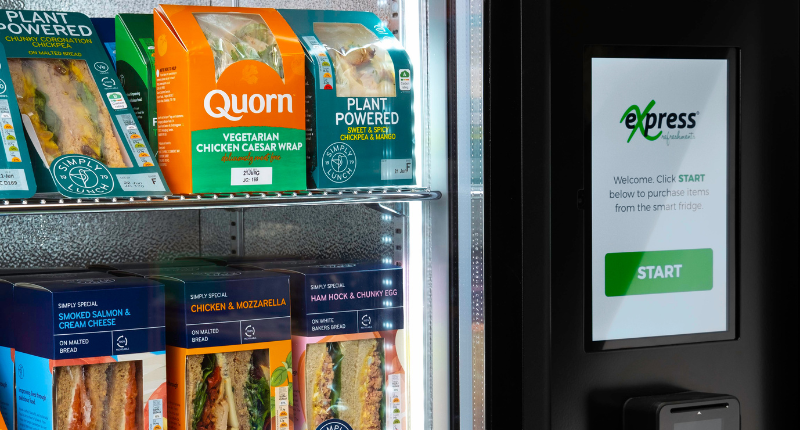
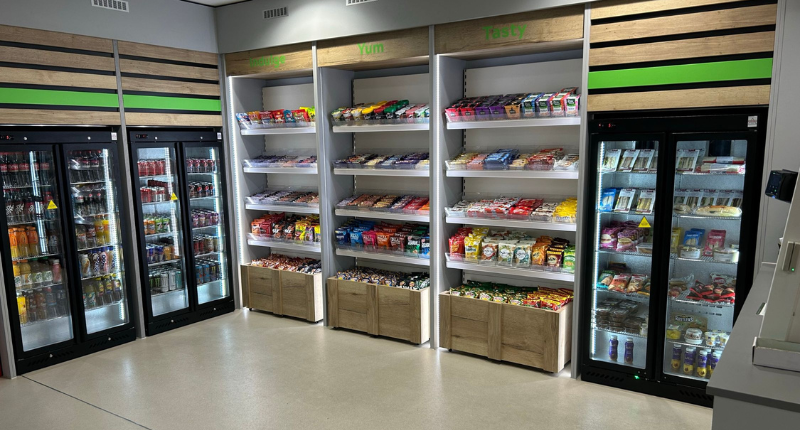
The number of standalone smart fridges in the UK increased by around 50% during 2025 to approximately 2,850 installations, according to the AVA’s latest figures. Micro markets also grew by 8%, reaching around 785 installations.
These aren’t simply vending machines with a different appearance. They represent a broader shift towards unattended retail, giving people access to a much wider range of products without requiring a traditional staffed canteen or café.
That could mean a smart fridge offering fresh sandwiches, salads, snacks and drinks, or a micro market creating something much closer to a small workplace convenience store.
The common factor is convenience.
Technology is changing what vending can do
One of the biggest changes in the industry has been the rapid adoption of technology.
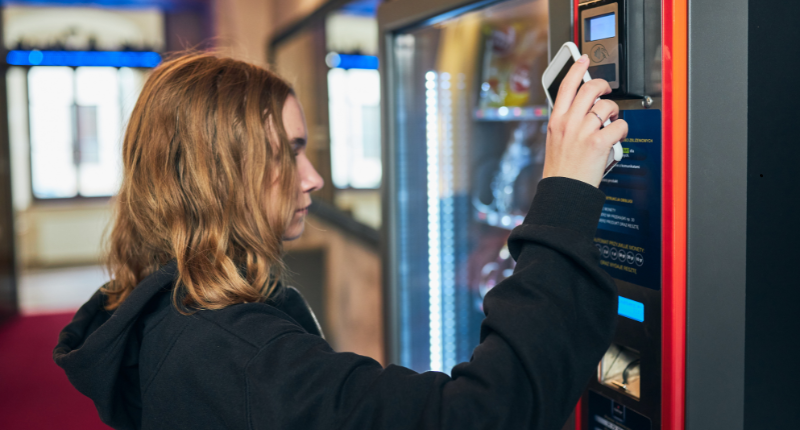
Cashless payment is now the norm rather than the exception. The latest AVA figures show that 95% of UK machines that charge are fitted with cashless technology, while around 30% no longer accept cash at all. Of transactions on cashless-enabled machines, 84% are now cashless, with 62% completed using a smartphone or smartwatch.
That’s a significant change in consumer behaviour.
But payment technology is only one part of the story.
Modern vending and automated retail systems can connect machines to live data, allowing operators to monitor sales, stock levels, machine status and other information remotely.
That creates opportunities to make the service more efficient and responsive.
Rather than simply visiting a machine because it is scheduled for a service or refill, operators can increasingly use data to understand what is happening inside the machine before deciding what needs to happen next.
The result can be better availability for customers, more efficient servicing and fewer unnecessary journeys.
Research into predictive maintenance in smart vending is also exploring how IoT sensors and machine-learning models could identify potential failures before they occur, further demonstrating how vending is moving towards a more connected model of retail.
Customers are demanding more choice
Technology isn’t the only thing changing.
The products being sold through vending and automated retail are changing too.
The latest industry figures show that cold drinks revenue increased by 15.4% in 2025, while food revenue increased by 12.2%. Snack revenue grew by 5.7% and hot beverage revenue by 4.1%.
Fresh food is particularly interesting.
Rather than simply providing something to tide someone over until their next meal, automated retail can increasingly provide a genuine meal or lunch option.
That’s important in workplaces where there may not be a canteen, café or shop nearby – particularly across manufacturing, logistics and other sites where employees may work shifts outside conventional opening hours.
And convenience doesn’t necessarily mean compromising on choice. It can mean making more choice available, in more places, for more hours of the day.
Coffee is another example of how the industry is changing
The same evolution can be seen in workplace coffee.
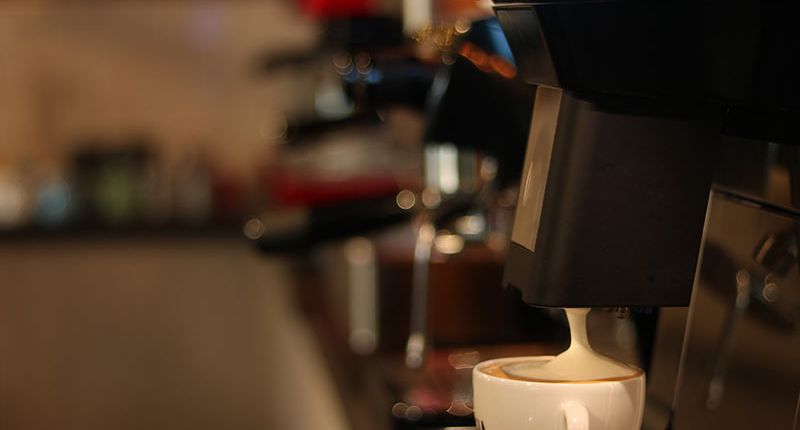
Commercial coffee machines are becoming increasingly sophisticated, with technology capable of producing drinks that would once have required a trained barista.
The AVA reports that the UK coffee-to-go segment generated £645 million in product revenue in 2025, with approximately 33,200 machines in operation. More than 40% of new tabletop machines now include fresh milk systems, reflecting growing demand for higher-quality, coffee shop-style beverages.
That tells us something important about changing expectations.
Employees don’t expect a workplace coffee machine to produce a standard hot drink anymore. They increasingly expect it to produce genuinely good coffee.
The difference might sound subtle, but it represents a much wider shift in workplace refreshment: quality, choice and experience are becoming just as important as convenience.
Vending is becoming part of the workplace experience
Perhaps the biggest change of all is the role that refreshments play within the workplace.
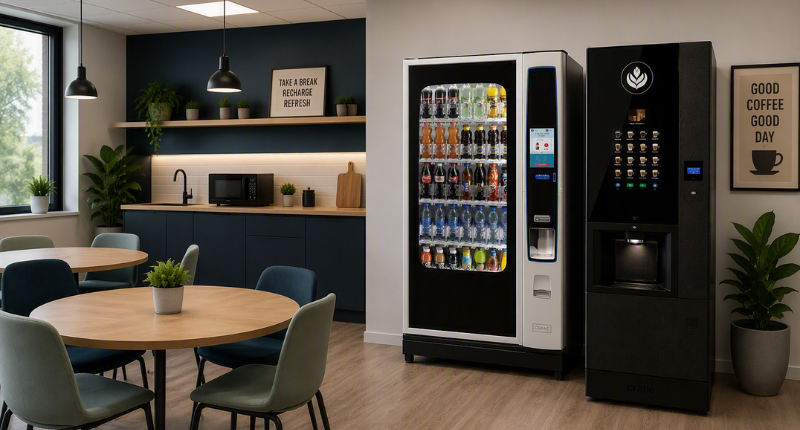
For many businesses, vending and refreshment provision is no longer simply about putting a machine in the corner and remembering to keep it stocked.
Employers and senior management teams are thinking about how they make the workplace more attractive, convenient and enjoyable for employees. In turn, improving satisfaction and retention.
That could mean providing access to fresh food throughout shift patterns, offering quality coffee across the day, making drinking water readily available or introducing a Smart Fridge or Micro Market where a traditional canteen just isn’t practical or cost-effective.
This is particularly relevant as employers continue to think about workplace experience, employee benefits and how they encourage people to spend time on site.
The refreshment offer becomes part of that experience.
In other words, the machine isn’t necessarily the product. The experience is.
The rise of the unattended convenience store
Perhaps the easiest way to understand where the industry is heading is to stop thinking about vending as a solitary facility and start thinking about it as a refreshment hub that leans heavily into unattended retail.
A traditional vending machine might offer 20 or 30 products. A modern workplace retail solution can offer considerably more.
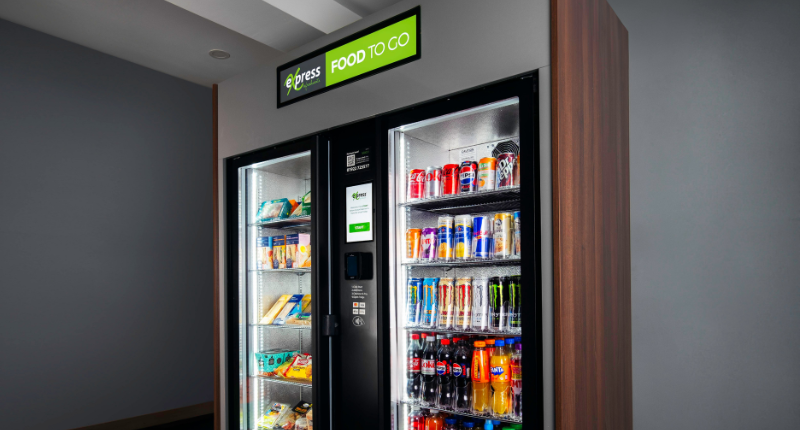
A smart fridge can provide fresh food and chilled drinks. A micro market can offer multiple product categories and a much broader shopping experience. Cashless technology makes purchasing seamless. Connected systems allow operators to monitor and manage the service remotely.
The technology is becoming less visible, while the retail experience becomes more important.
We’re moving from single machines to convenient destinations that cater to modern demands.
Does this mean traditional vending is disappearing?
Not at all.
Traditional vending remains a major part of the industry and continues to generate significant revenue.
But it is increasingly becoming one part of a much broader automated retail ecosystem.
Different workplaces and locations have different requirements.
A manufacturing site with hundreds of employees working shifts may need something very different from a small professional services office. A hospital, distribution centre, university or leisure facility will have its own requirements too.
The future isn’t necessarily about replacing vending machines.
It’s about having the right combination of technology, products and service for the environment.
The Coinadrink view
If the latest industry figures tell us anything, it is that vending isn’t standing still.
The sector is growing, but more importantly, it is evolving.
Cashless payments are becoming standard. Smart fridges are growing rapidly. Micro markets continue to expand. Fresh food is becoming more important. Coffee quality is improving. Connected technology is creating new ways to manage machines and understand customer behaviour.
Having operated in the vending and workplace refreshment industry since 1962, we’ve seen the sector change considerably.
The biggest change isn’t simply the technology inside the machines. It’s the way businesses now think about refreshment.
Vending is increasingly about choice, convenience, availability, quality and workplace experience.
The traditional vending machine isn’t disappearing, but the industry around it is becoming much broader.
From vending machines and premium coffee to Smart Fridges, Micro Markets, fresh food and connected technology, the future of workplace refreshment is less about selling a chocolate bar or bag of crisps and more about creating a convenient retail experience wherever people work.
And perhaps that’s why it’s time we stopped thinking of vending as simply vending.
It’s automated retail. And it’s already a £3.78 billion industry.

Leave a Reply
Want to join the discussion?Feel free to contribute!