
The working from home debate is asking the wrong question

Is working from home better for business?
It is a question that has dominated workplace discussions since the pandemic.
Employees have argued for flexibility, while businesses have questioned productivity, collaboration and culture. But perhaps the question itself is wrong.
A more useful question might be: what kind of workplace experience helps people do their best work? And there isn’t one answer.
The case for working from home is already well established
Greater flexibility can improve quality of life, widen access to employment and help organisations retain talented people who may otherwise struggle with a traditional working pattern.
CIPD research found that 80% of employees believe flexible working has had a positive impact on their quality of life, while 41% of employers believe increased home or hybrid working has improved productivity or efficiency.
But that doesn’t mean working from home is automatically better.
There are things that happen more naturally when people share a physical environment.
A graduate overhears a conversation and learns something. A colleague asks an experienced team member a question. A relationship develops over lunch or the coffee machine. A problem gets solved because two people happen to be in the same place at the same time.
These interactions can be difficult to measure, but they are part of how organisations learn, develop people and build culture.
The reality is that both sides of the argument can be right.

The real issue is the workplace experience
Research from the University of Birmingham and London School of Economics reinforces the importance of looking beyond location.
A study involving more than 800 UK businesses found that management practices, training and organisational capability were important factors in whether remote and hybrid working delivered productivity benefits.
That suggests the debate shouldn’t simply be about where people work.
It should be about how organisations manage work.
A poorly managed hybrid workplace can be frustrating. A poorly designed office can be equally frustrating.
But a well-managed flexible workplace can give people autonomy while still creating opportunities for collaboration, learning and connection.

Offices and workplaces need more reason to exist
If employees are being asked to spend more time in the workplace, what is the workplace actually giving them in return?
Simply recreating the home office with rows of desks and laptops is unlikely to be compelling.
The workplace needs to offer something that is difficult to replicate at home: better collaboration, opportunities for learning and mentoring, social interaction, access to specialist equipment or simply an environment where people can step away from their desk and connect with others.
This doesn’t mean turning every office into a leisure facility.
It means being more intentional about what the workplace is designed to achieve.

It’s all in the small details…
Employee experience is often discussed through big initiatives: wellbeing strategies, engagement programmes and flexible working policies.
But much of it is created through smaller, everyday experiences.
Is the workplace comfortable? Can employees take a proper break? Is there somewhere to sit and talk? Is good food and drink readily available?
These might sound like minor considerations compared with productivity targets and business strategy, but they contribute to how people feel about coming to work.
CIPD’s 2025 wellbeing research found that hybrid working was associated with more positive perceptions of mental health than either entirely home-based or entirely office-based working.
The message isn’t that hybrid is the perfect model for every organisation.
It is that the way people experience work matters.
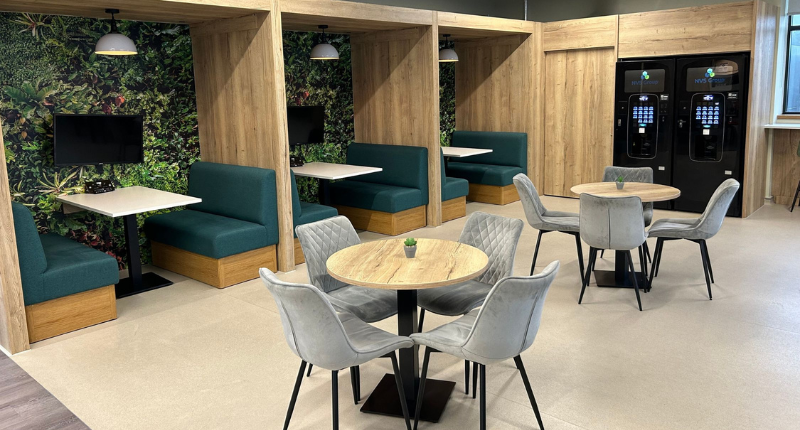
The answer IS NOT more days in the office
There is a temptation to reduce the entire debate to a number on a policy document: two days, three days, four days or full time.
But a number doesn’t create a good workplace.
Different activities require different environments. Some work demands concentration and can be done extremely well at home. Other work benefits from collaboration, discussion and face-to-face interaction.
Some learning happens through structured training. Other learning comes from simply being around experienced colleagues.
The strongest organisations are likely to be those that recognise these differences rather than trying to force every type of work into the same model.
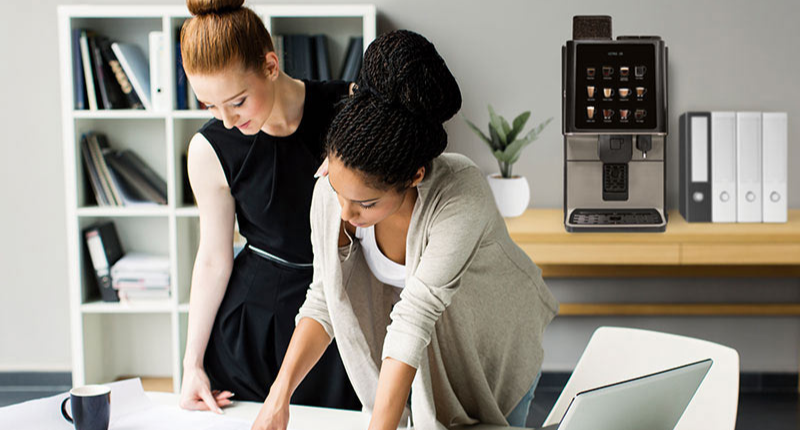
So, where do refreshments fit in?
This might seem a long way from coffee machines, vending and workplace refreshments.
In reality, it is part of the same conversation.
A coffee machine won’t solve a culture problem, and a vending machine won’t make a poor workplace engaging.
But the facilities surrounding employees contribute to how a workplace feels every day.
For a professional services business, that might mean a welcoming coffee area that encourages people to stay and talk. For a manufacturing or distribution operation, it could mean reliable access to food and drinks throughout long shifts, alongside somewhere comfortable to take a proper break. Micro Markets and Smart Fridges can provide convenient access to refreshments throughout the day for larger workplaces regardless of industry.
The equipment is only part of it. The experience it helps create is what matters.
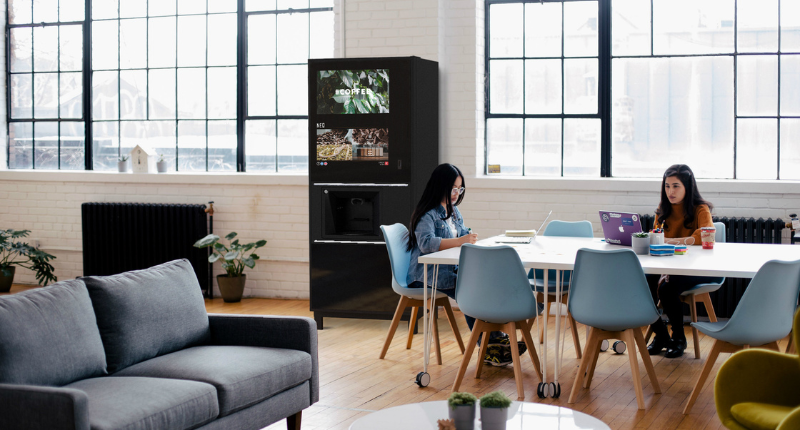
The future of work isn’t home vs office
Perhaps the working-from-home debate has become too binary.
The future of work is unlikely to be decided by whether the office wins or the home wins. It will be decided by which organisations are better at understanding why people need to come together, when flexibility matters and what makes work a genuinely positive experience.
The organisations that succeed won’t necessarily have the biggest offices or the most generous remote-working policies. They will be the ones that understand their people and design work around helping them perform, connect, learn and thrive.
So perhaps the question isn’t: “How many days should employees be in the office?”
Instead, it’s: “What kind of workplace helps our people do their best work?”
That is a more difficult question. But it is also a much more useful one.

Leave a Reply
Want to join the discussion?Feel free to contribute!